
Phew Blog
Mar 3, 2026
A good LinkedIn posting system should help busy experts stay visible without turning content into a second job.
That is the real challenge for most professionals. It is rarely a lack of ideas. It is the lack of a clean system for turning what they already know into posts they can actually publish.
The best system is not the one with the most moving parts. It is the one you can keep running during a normal week.
That creates long gaps between posts and makes visibility depend on mood instead of process.
That adds friction before they even begin. Every draft feels like a performance review.
That usually leads to burnout, generic output, or both.
A workable LinkedIn system has three parts.
Keep track of ideas, articles, conversations, observations, customer questions, and moments of tension worth sharing.
Use a small set of repeatable post shapes such as lessons learned, strong opinions, practical frameworks, reaction posts, and customer-pattern observations.
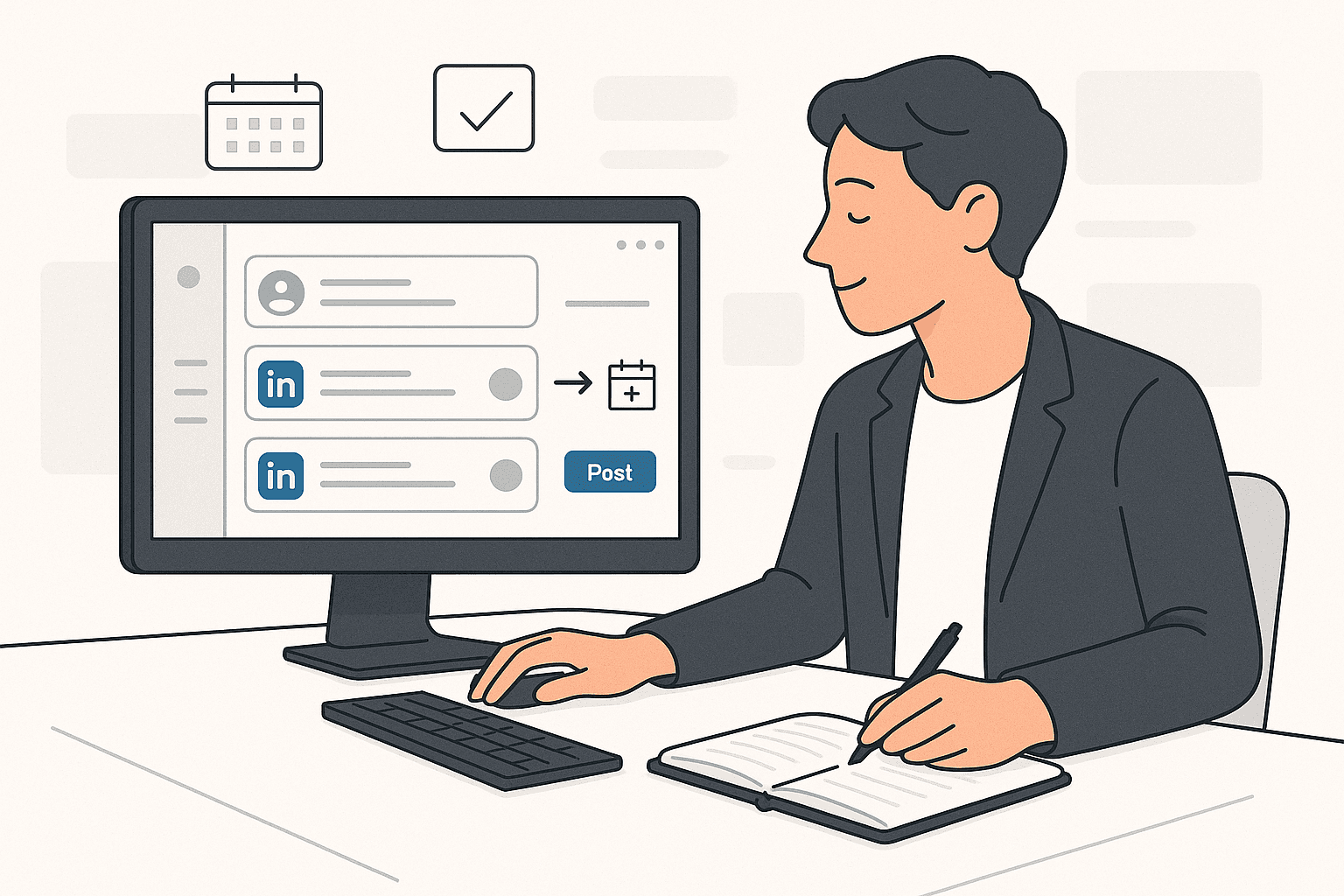
Put one recurring drafting block on the calendar so publishing does not depend on spare time magically appearing.
For most experts, one light weekly cycle is enough.
Early week, collect signal. Midweek, turn the best ideas into rough drafts. Late week, review and queue what feels sharpest.
You do not need a daily factory. You need a repeatable rhythm that does not fight the rest of your job.
Post what you are learning. That keeps your content grounded in real work.
Post what you are noticing. Pattern recognition is useful content.
Post what you believe. Clear perspective is often more memorable than polished summary.
The goal is not to manufacture a persona. The goal is to make your existing expertise more visible.
The fastest way to ruin a posting system is to make it sound like a brand deck.
Your system should preserve how you naturally frame tradeoffs, explain patterns, and react to what you see in the market. Efficiency matters, but voice drift kills trust.
That is why batching helps only up to a point. Draft in batches if you want, but always give each post its own final edit.
A lot of experts get stuck because they treat every post as a brand-new invention. That is too expensive.
A better system keeps a small bank of unfinished material: half-formed ideas, examples, customer questions, drafts, and angles you can return to later.
That way, when it is time to post, you are choosing from live material instead of staring at a blank page.
Do not chase every trend. Relevance is better than noise.
Do not overcomplicate the workflow. A small repeatable system beats a complex one you abandon.
Do not try to sound like a generic founder template. LinkedIn works better when the writing sounds like a person with skin in the game.
Phew is useful when your bottleneck is deciding what matters, shaping it in your voice, and getting from signal to draft with less friction.
That matters for busy experts because the hard part is usually not typing. It is selecting the right idea before the moment passes.
The best LinkedIn posting system is the one you can keep running without resentment.
For most busy experts, that means a simple weekly rhythm, a clear way to collect signal, and a drafting process that protects their voice instead of flattening it.
If you do want to try Phew free for 7 days and see your social score, here is where to start.